Wildgate
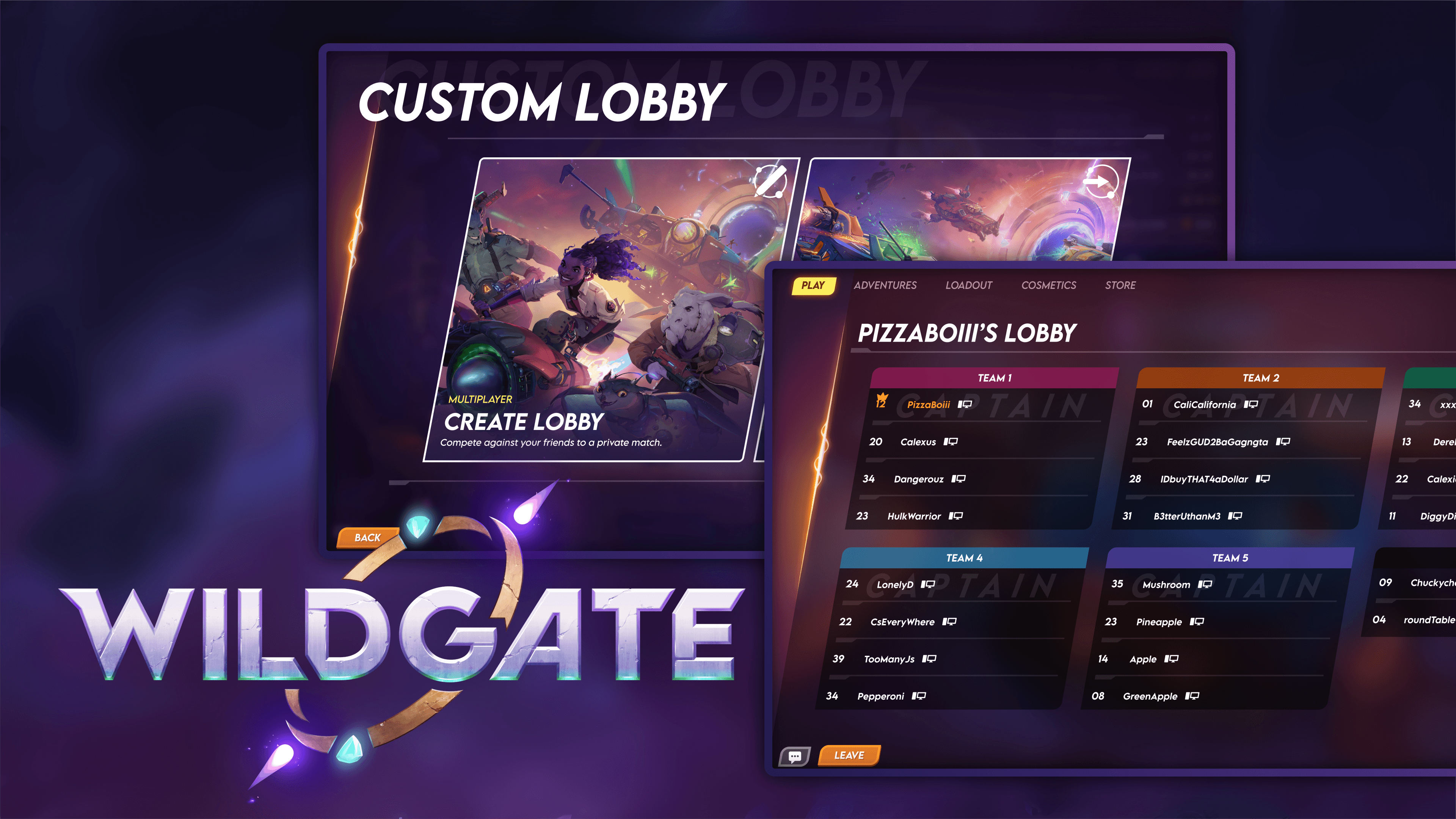
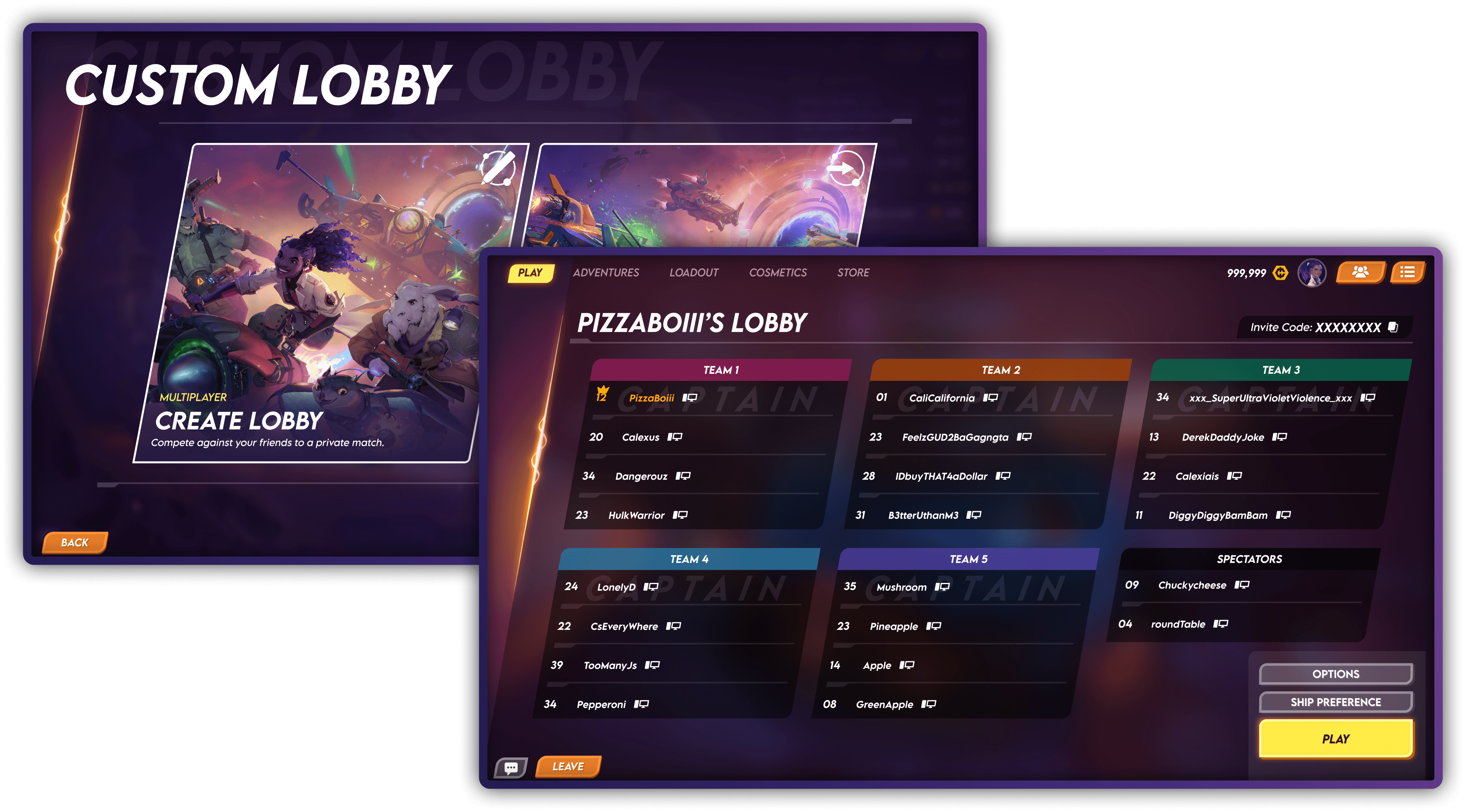
I contributed to Moonshot’s game Wildgate, quickly onboarding and owning sprint-based features. Custom Lobbies became a highlight for me. I crafted an intuitive layout, familiar to FPS players, that spanned both the client and combat spaces. The result was a player-driven feature that enhances social play, supports community events, and provides a strong foundation for future growth.
Role
UX/UI Designer
Feature
Member
Timeline
2 weeks
Tools
Figma
Wildgate is a crew-based PVP multiplayer shooter that blends tactical ship-to-ship combat with fast-paced first-person action. Evade deadly environmental hazards, search for powerful weapons and ship upgrades, and be the first crew to escape with the Artifact... or the last crew left flying.
Goal
Allow players to set up games with friends and give event organizers the tools to run tournaments and exhibition matches.
Research
Requirements
Upon onboarding to this feature, the team identified these as the core requirements for Custom Lobbies.
Lobby owner role
Settings
Invite by friends list and code
Spectator Roles
Lobby Chat
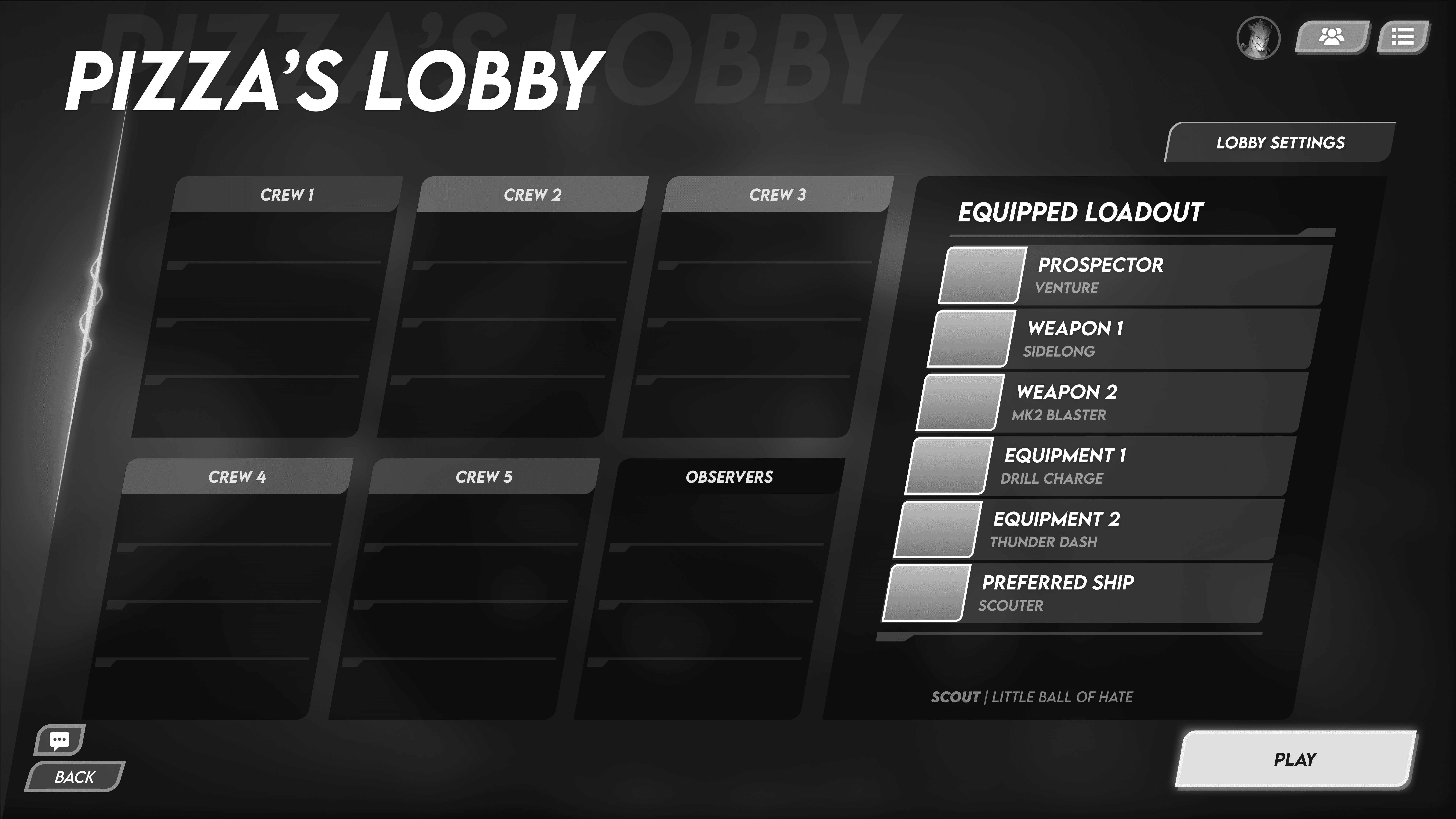
Access to equipment and gear
Market Research
I reviewed popular FPS games to understand industry standards for custom lobbies:
Apex Legends demonstrates strong organization for managing large party sizes effectively.
Valorant offers simple, clean visual treatments that keep the interface approachable and easy to navigate.
Black Ops 6 integrates shortcuts for equipment and gear customization in the lobby space.
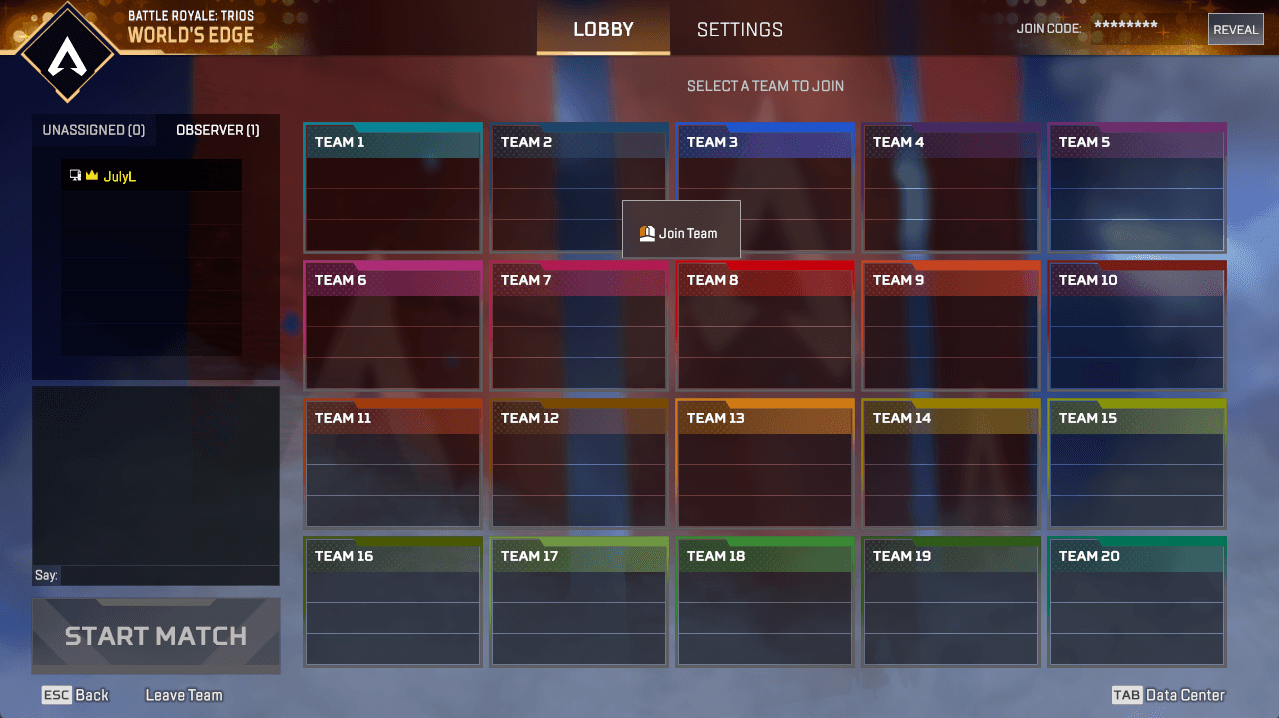
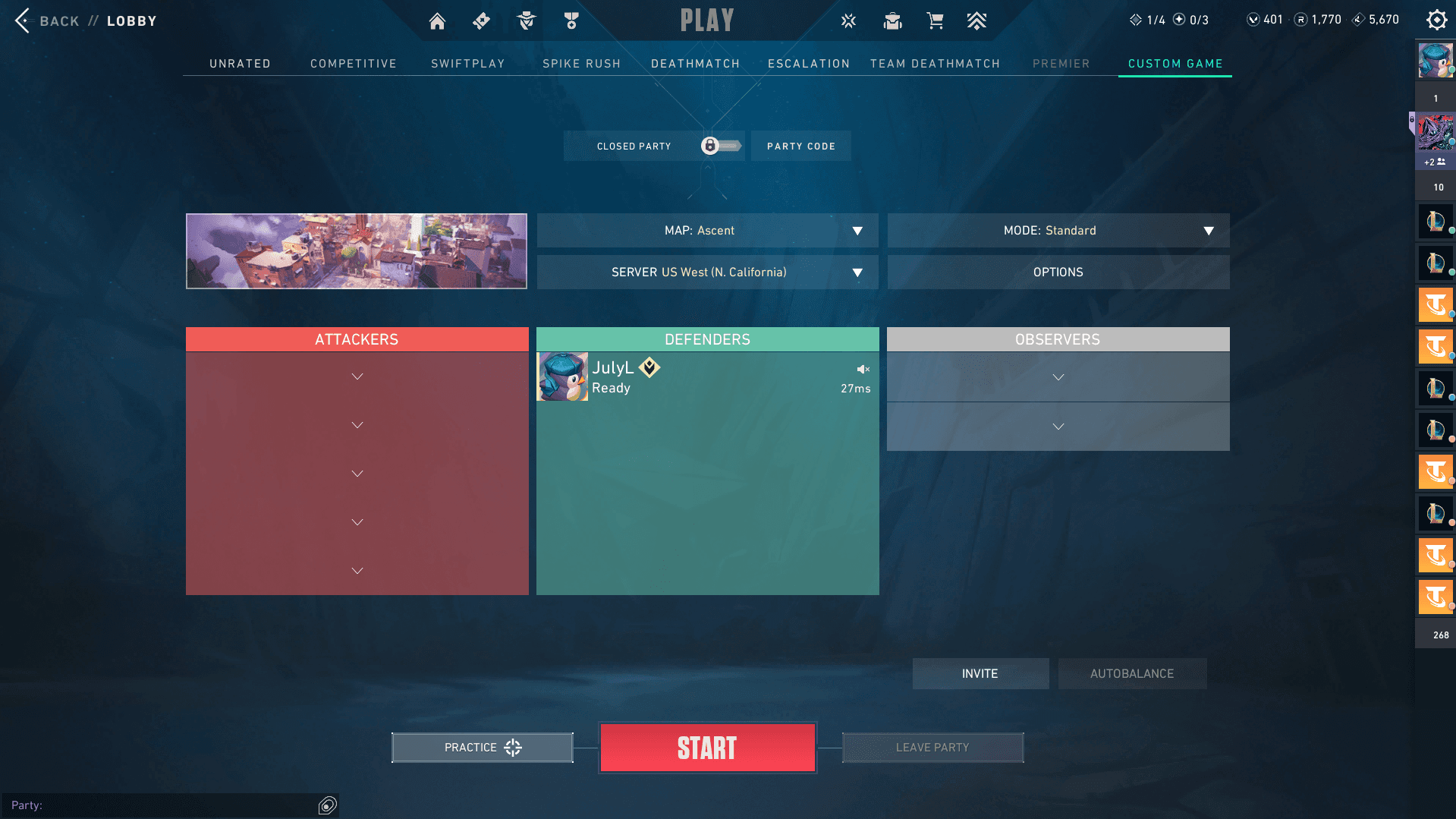
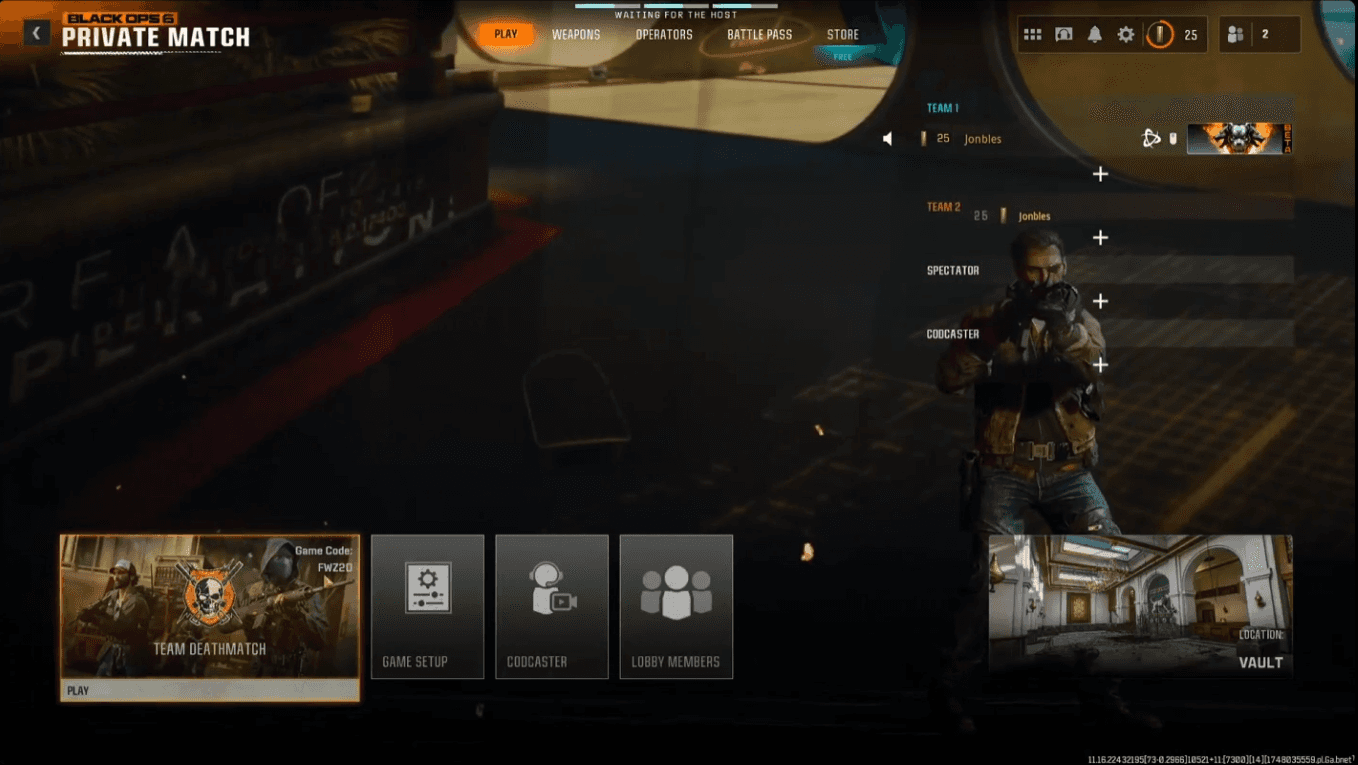
I ensured my designs stayed true to Wildgate’s Interstellar Minimalism UI style.
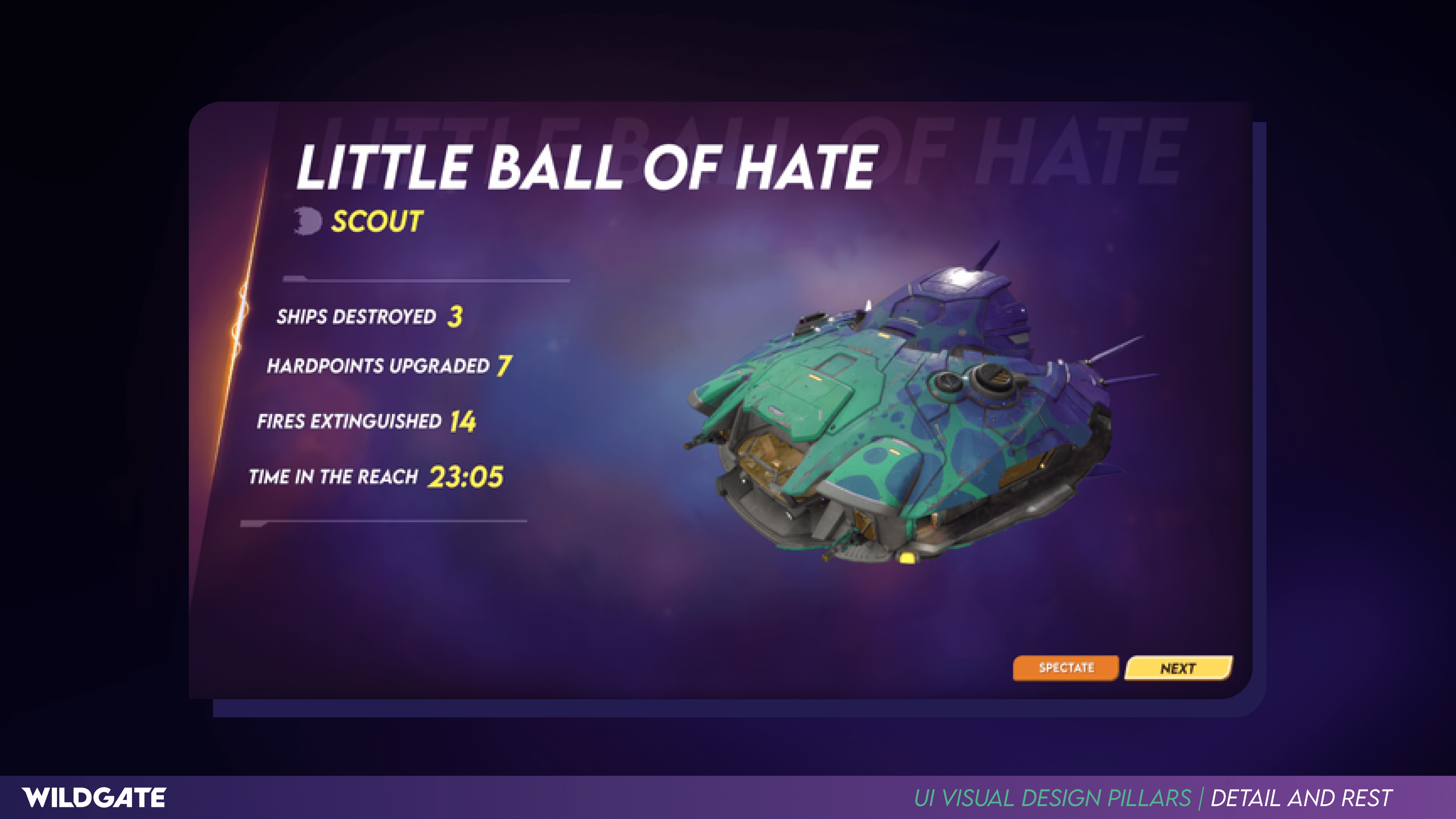
Clear layouts with generous breathing room, allowing detailed information and text to be displayed without overwhelming players.
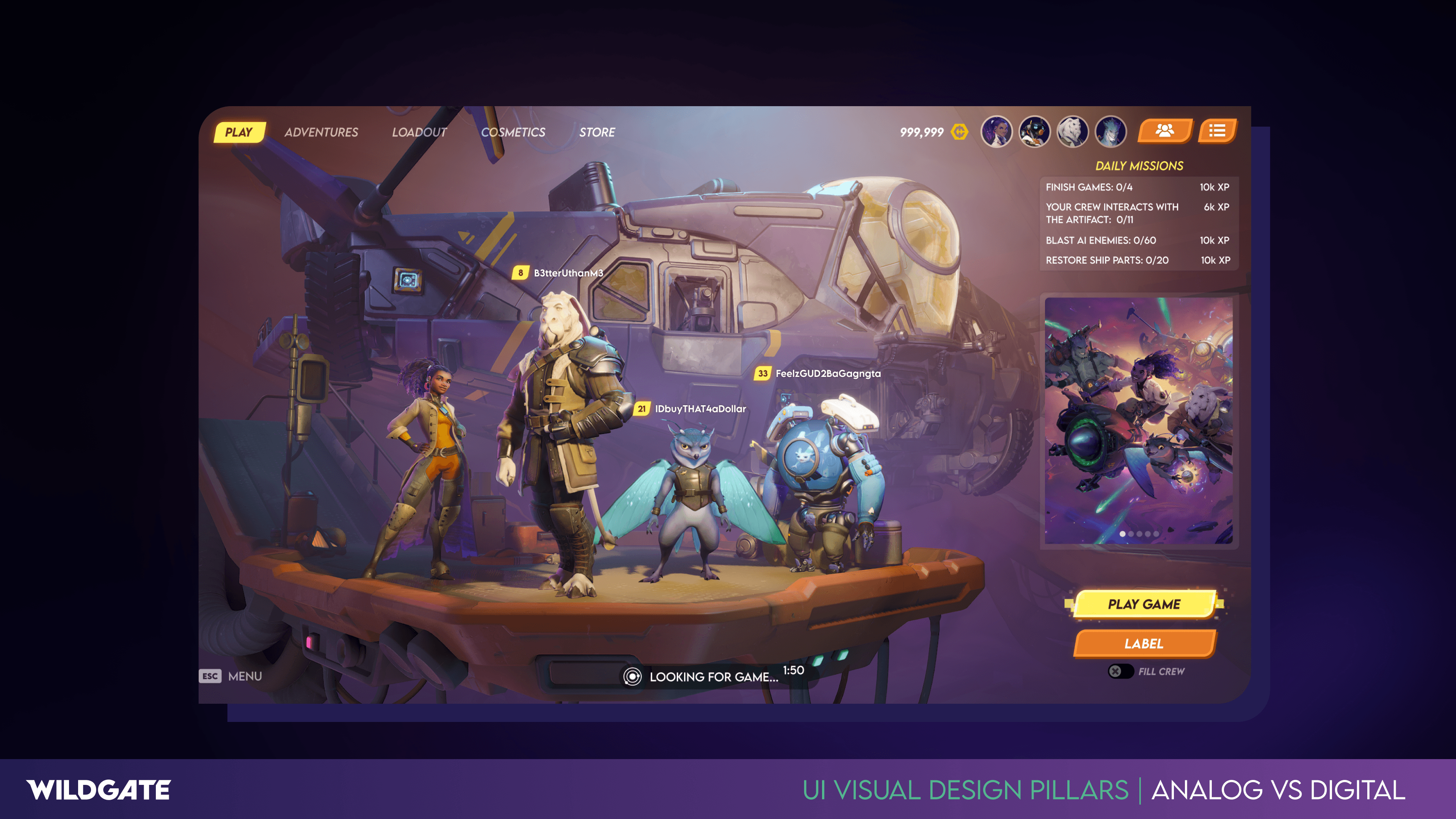
Thoughtful balance between analog and digital elements to preserve Wildgate’s distinctive retro vibe, creating screens that felt contrasting tech.
Design
Concept
Custom Lobby
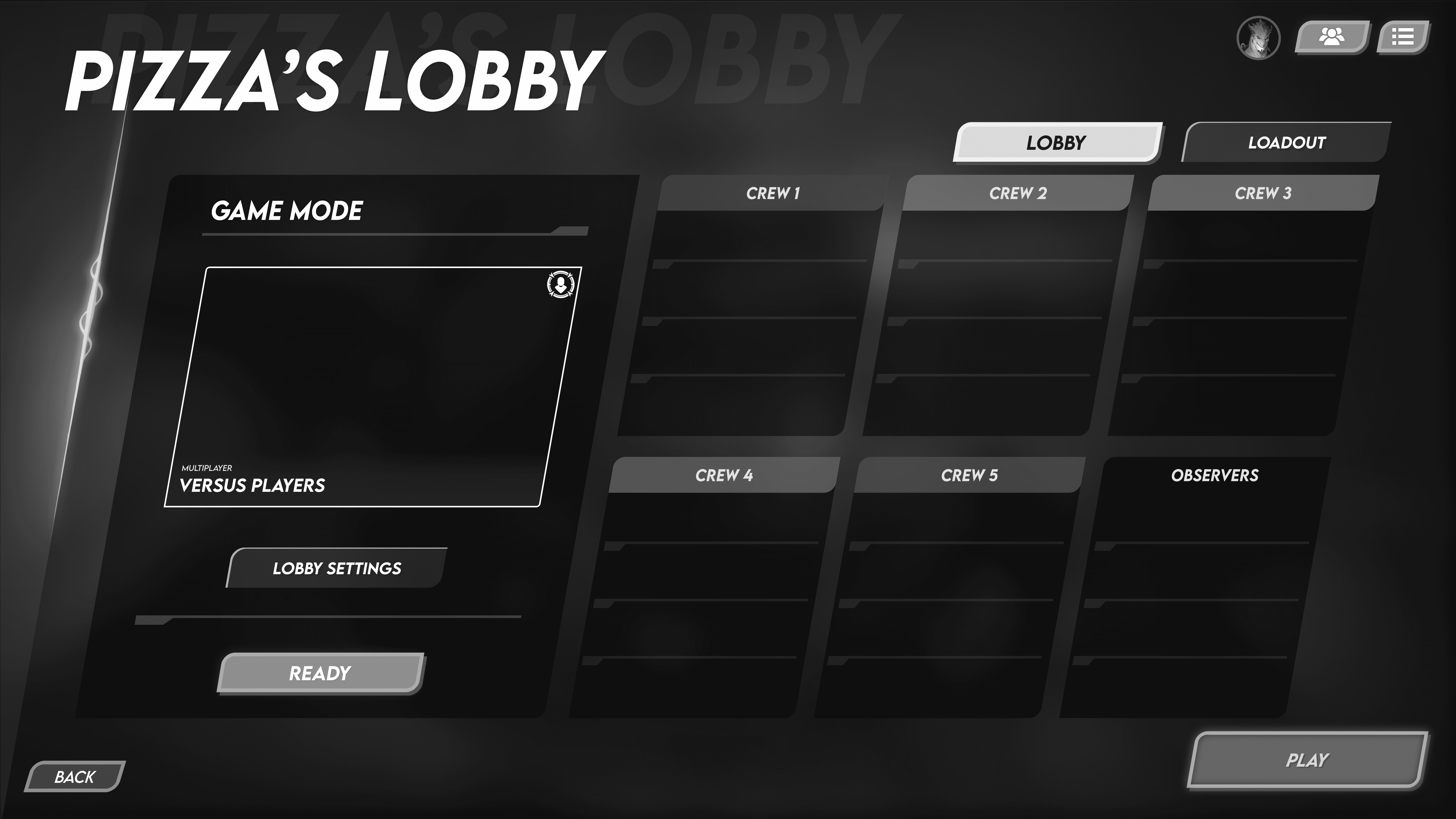
A private game session that is intuitive for both players and event organizers, while staying true to the game’s unique brand identity. Key features are:
A organized space where players join, form teams, and prepare for matches.
Dedicated perspectives for spectators and viewers to follow the action.
A detailed results screen summarizing performance, outcomes, and team stats.
User Flow
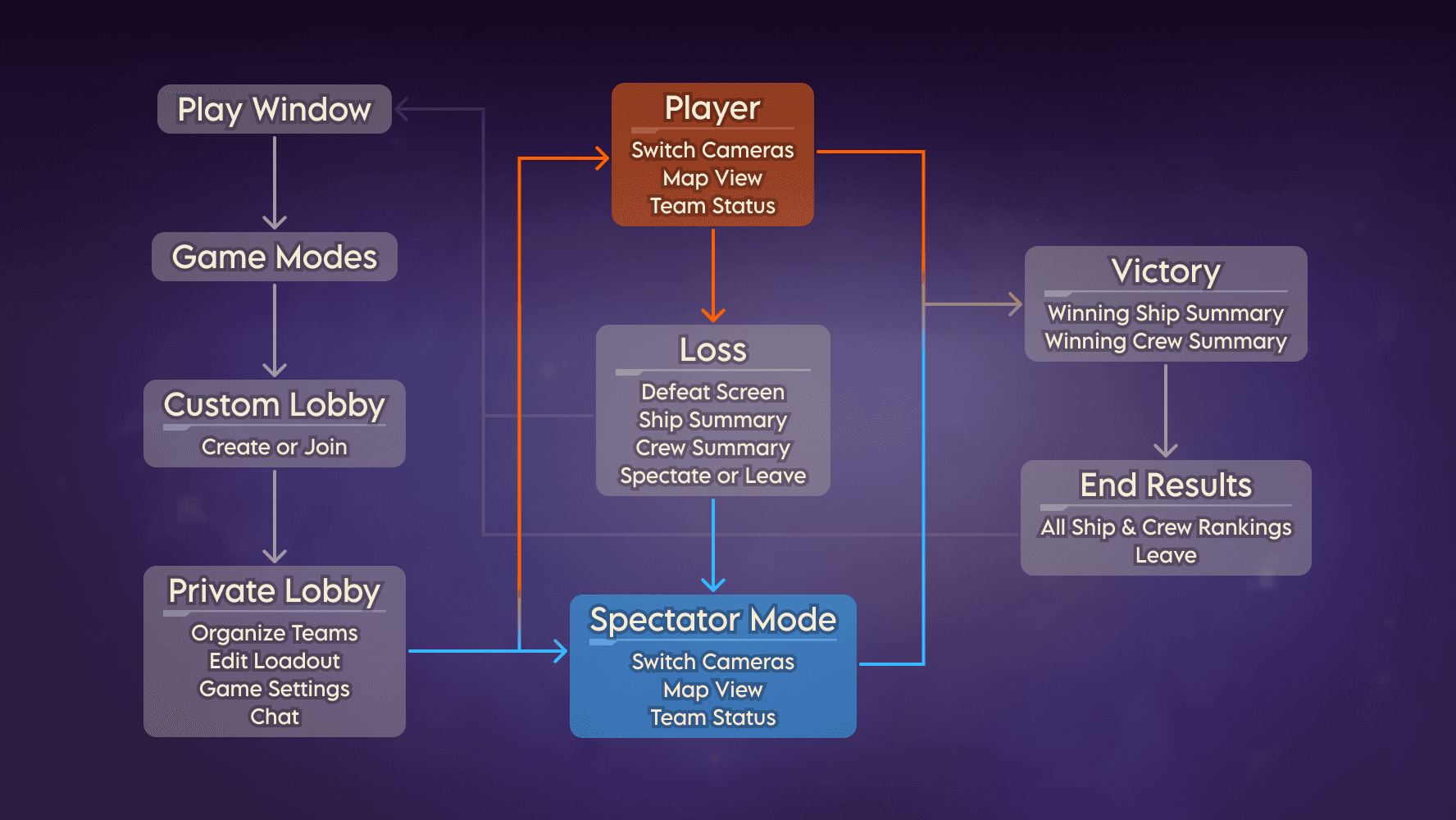
I defined clear, separate flows for players and spectators, ensuring each participant can fully enjoy and follow the action throughout the match.
Lofi Wireframes
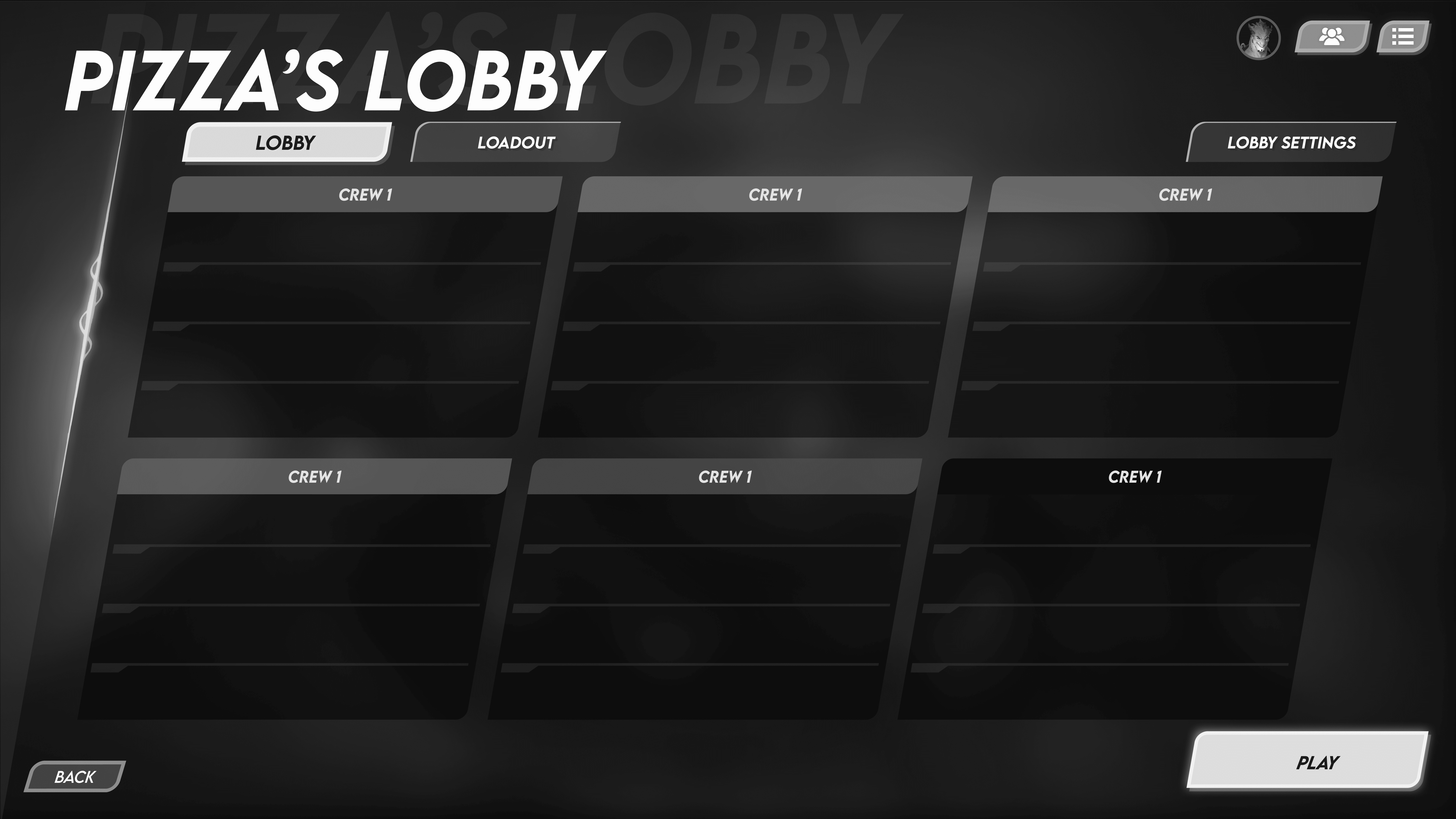
I explored multiple grid and column layout variations that aligned with the game’s established style and shape language, ensuring the experience felt visually familiar to existing players.
Solution
Modular Design
System longevity allows it to easily accommodate new game modes and layout variations in the future.
Customization
Options that allow both players and developers to quickly tailor their experiences, supporting experimentation, testing, and a wide range of playstyles.
Cross-Platform
Support
Clear PC and console navigation was critical for Wildgate’s multi-platform design, as it facilitated a seamless experience across platforms.
Learnings
Live service designs continuously evolve to support ongoing growth and change.
Early designs must be flexible and scalable to support ongoing updates and long-term growth, preventing costly changes later on.
Both qualitative player feedback and quantitative data are essential for guiding design decisions.
In live service games, there is no final “do-it-all” solution, but establishing clear and thoughtful UX early on is essential for supporting future growth and iteration.
See more